Wicca – Pagan Religions
Wicca [Pagan Witchcraft] originated with the human civilisation, and has existed in all parts of the world, predating even Christianity. It is a Neo-Pagan religion, based on a deep respect of nature and the certain knowledge that we do not have the right to exploit for our own gain. Today Witchcraft is commonly translated as “the Craft of the Wise”, thus meaning that in earlier times, the Witch was the “wise one” of his or her village, and served as the resident “Shamanic” healer.
However, from the Middle Ages, up until fairly recently, the word “Witch” was used very differently from today. Witches were thought to be evil –to use magic for their own personal gain, malice or entertainment. “This notion, that witch worship Satan, was put forward by the Roman Catholic Church as it made its way around Europe in an effort to suppress the native earth-based religions prevalent at the time. They succeeded to the extent that they drove the practitioners of these religions underground where much of their knowledge and traditions were lost,” says Kenneth Kerr.
“Wicca is not synonymous with Satan worship. The very concept of a supreme evil is alien to Wicca. In fact, most Wiccans don’t even believe in Satan. The devil is a Juedo-Christian construct and as such has nothing to do with Wicca.”
Margot Adler, an author, journalist and Wiccan priestess, describes Wicca as a religion centred around the love of nature and its elements (earth, air, fire, water, sun, moon and so on). The religion does not worship nature, but loves it, reveres it and it therefore nature orientated.
A fundamental principle of Wicca is “the Law of Threefold”, which suggests that whatever one does, or send out is returned threefold, be it good or bad; “as it harm none, do as thou wilt”.
British Civil Servant, Gerald Gardner, is known to have practiced witchcraft, and for reviving it in the 1950s, after the British Government repealed the anti-witchcraft laws. Since then, Wicca has become a popular religious movement and is gaining strength by day. According to Margot Adler, today the believers of Wicca run into millions and are found in almost all English speaking countries.
“In 2007, the Pentagram was added to US Department of Veterans Affairs list of emblems of belief that can be included on government-issued markers, headstones, and plaques honouring deceased veterans”, thus fully recognising Wiccan religion [practice] within United States.
Recently, people have started understanding witchcraft is not associated with evil, and practicing it as the religion intended, of God and Nature. A renewed interest in the religion is arising and witches who profess to practice and believe in witchcraft are “coming out of the closet”, so to speak, with a sense of pride and confidence.
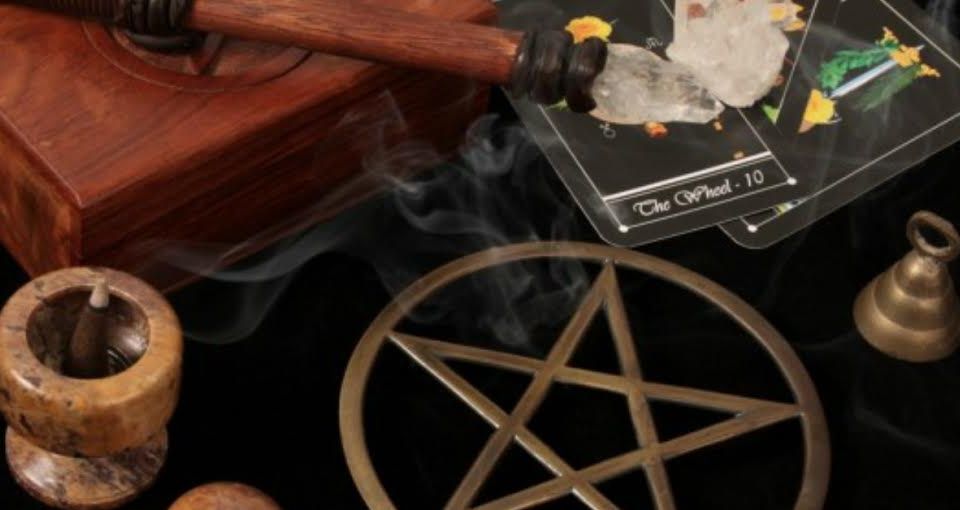
Ordinarily one might not be able to tell if their neighbour is a witch, but some witches do wear a pentagram or pentacle (five pointed star) which is merely the symbol of the five elements of nature, earth, water, air, fire and spirit. This symbol is not something symbolising anything sinister or evil, as most have associated it with such.
“Modern day witches, as with in earlier times, usually worship in small groups called ‘covens’, or singly –known as a solo-witch. They celebrate eight solar festival holidays during the year known as ‘sabbats’. These are the solstices, the equinoxes and four more days. There are also 13 lunar festivals called ‘esbats’ observed of full moon nights. These twenty-one festivities are also called circles,” says Adler.
Wiccans tend to hold their rituals and ceremonies at night, and usually in an area surrounded by nature, like the woods or forest. Some people think this is because witches are evil, that is why they hold their ceremonies at night. The true reason for this however, dates back to the first witches. In the old world, especially within the Celtic tribes, the day followed an entirely different schedule than it does in modern times. The new day for them actually began at sunset. This is also why most observances of holidays were celebrated on the evening before the actual calendar day. The second reason is that survival had an entirely different meaning during those times. Almost without exception, everyone spent their daylight hours tending the crops, their herds, or engaged in their trade. All daylight hours were vitally important simply for survival reasons.
With the exception of the infamous Salem Witch Trials held throughout Europe and America, from the 14th to 17th century, the history of witchcraft is largely undocumented, and flooded with gruesome tales of magic and macabre, ghouls and ghosts, superstition and sex and the selling of souls to the devil, however according to historians the basic nature of the craft is and earth-based religion, which has played a vital part in human evolution –a religion which considers themselves “one with nature”.
 Nadiyah Kaur
Leave a comment